When nocturnal pests such as roof rats ( Rattus rattus ) or Mexican free-tailed bats ( Tadarida brasiliensis ) infiltrate residential roof structures, the biological hazard extends beyond superficial noise. Attic…
When nocturnal pests such as roof rats (Rattus rattus) or Mexican free-tailed bats (Tadarida brasiliensis) infiltrate residential roof structures, the biological hazard extends beyond superficial noise. Attic substrates subjected to ambient heat exceeding 130°F accelerate the volatilization of dried rodent urine, pheromone trails, and biological droppings into indoor airflow corridors. Unsealed recessed lights, attic hatchways, and duct junctions permit airborne particulates to circulate directly into living areas. This biological residue contains zoonotic vectors including Salmonella enterica, Leptospira bacteria, and dust-borne histoplasmosis spores. Resolving this contamination requires removing biological catalysts rather than applying superficial masking deodorizers.
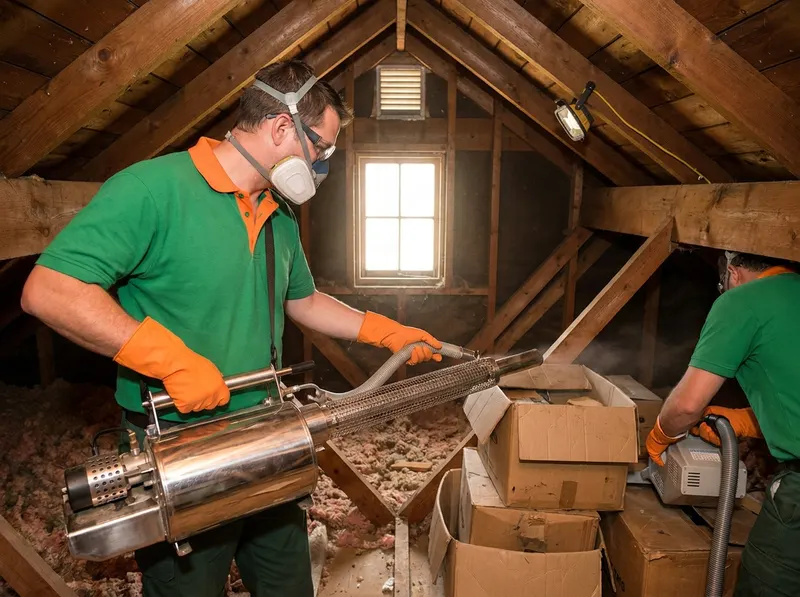
Remediating these attic spaces requires a controlled process governed by strict occupational protocols. Technicians wear personal protective equipment aligned with NIOSH respiratory filtration standards and operate within guidelines outlined by the OSHA biohazard safety framework. Remediation begins by running negative-air HEPA extractors through flexible conduit routed outdoors, capturing 99.97% of particulate matter down to 0.3 microns. Technicians then remove all soiled loose-fill fiberglass or blown cellulose. The exposed attic decking, joists, and top plates receive an electrostatic fogging of an EPA-registered hospital-grade disinfectant to neutralize lingering viral and bacterial contaminants.
Structural vulnerabilities vary significantly across San Antonio architecture. In historic lath-and-plaster properties throughout King William Historic District and Monte Vista, unbaffled soffits and settling ridge boards create natural entry conduits. Conversely, multi-pitch roof designs in Stone Oak, Westover Hills, and Dominion frequently develop pest harborage at barrel-tile eaves and roof-line step-downs. CedarQuill Pest Management pairs biological elimination with physical pest proofing using 19-gauge galvanized wire mesh compliant with ASTM corrosion-resistance specifications. This non-chemical exclusion seals transitions along fascia lines and dormers without restricting the passive airflow balances detailed by the AMCA.
Biological restoration preserves the structural integrity and indoor environmental quality of the property. When structural wood retains deep organic staining, technicians apply natural enzymatic neutralizers to dissolve proteins without releasing synthetic volatile organic compounds, meeting indoor air quality goals set by the U.S. Green Building Council. If rodent ectoparasites like bat bugs or tropical rat mites are present, treatment follows Pest Control Technology integrated management strategies. Cleaned spaces can then be re-insulated with virgin materials to achieve the recommended thermal ratings documented by the ENERGY STAR program and verified against NAIMA insulation standards. For diagnostic questions, property managers can connect directly with CedarQuill Pest Management at (469) 424-9098.
Every job gets a firm, written price after a free on-site visit.
For standards, safe disposal, and service guidance on pest control services in San Antonio, TX, useful references include U.S. EPA, ENERGY STAR, U.S. Dept. of Energy, Consumer.gov, U.S. Census Bureau, and Google Maps. General consumer and small-business resources are available from USA.gov, Better Business Bureau, FTC Consumer Advice, U.S. Small Business Administration, and Ready.gov.
Tell us about your attic decontamination & biological sanitization job in San Antonio and we'll send a clear, written quote, usually the same day.
 CedarQuill Pest Management